
Freedom is temporary, repression is permanent
Indonesians in Melbourne may enjoy a respite from Prabowo's attack on freedom of expression, but it's likely to be temporary.

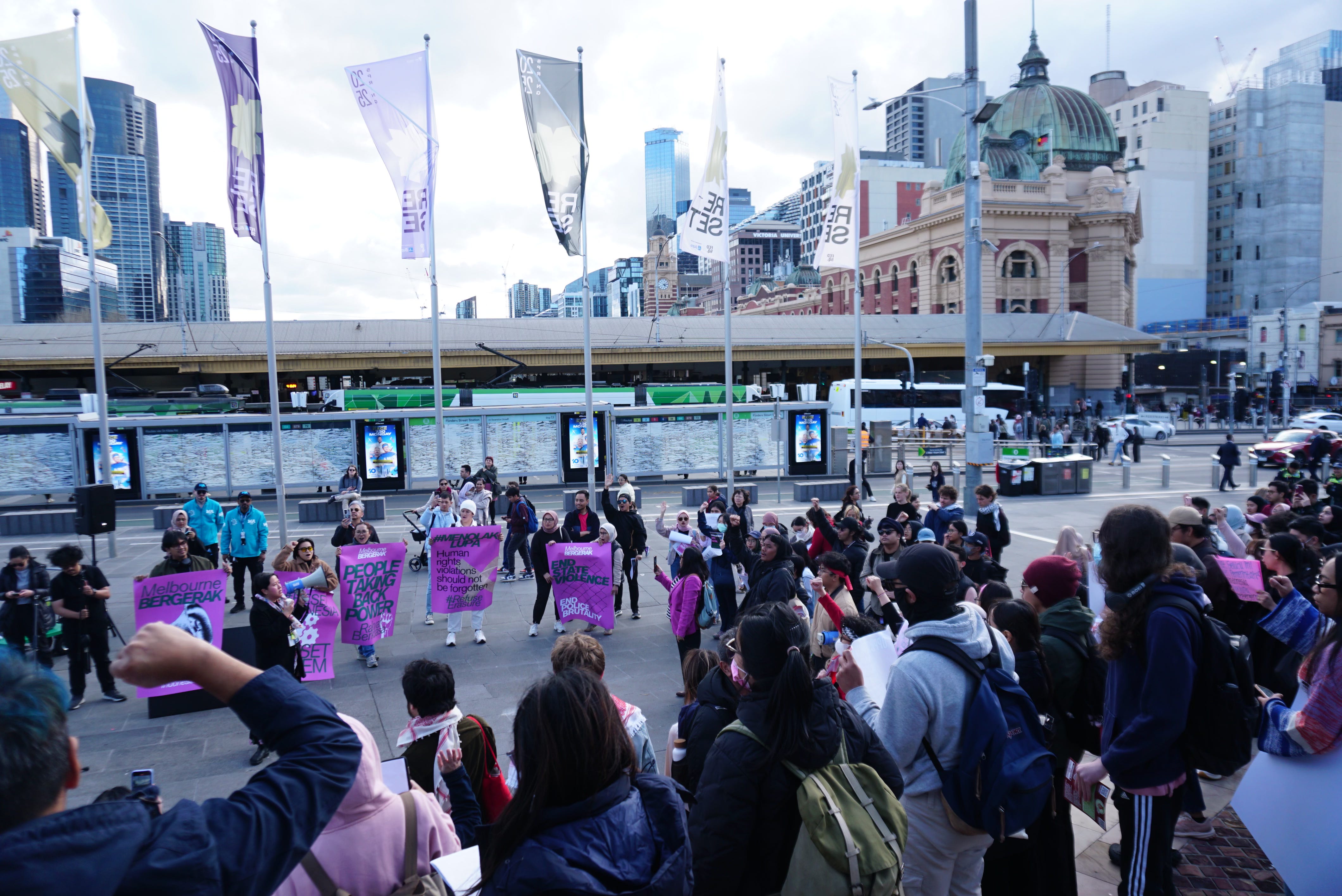
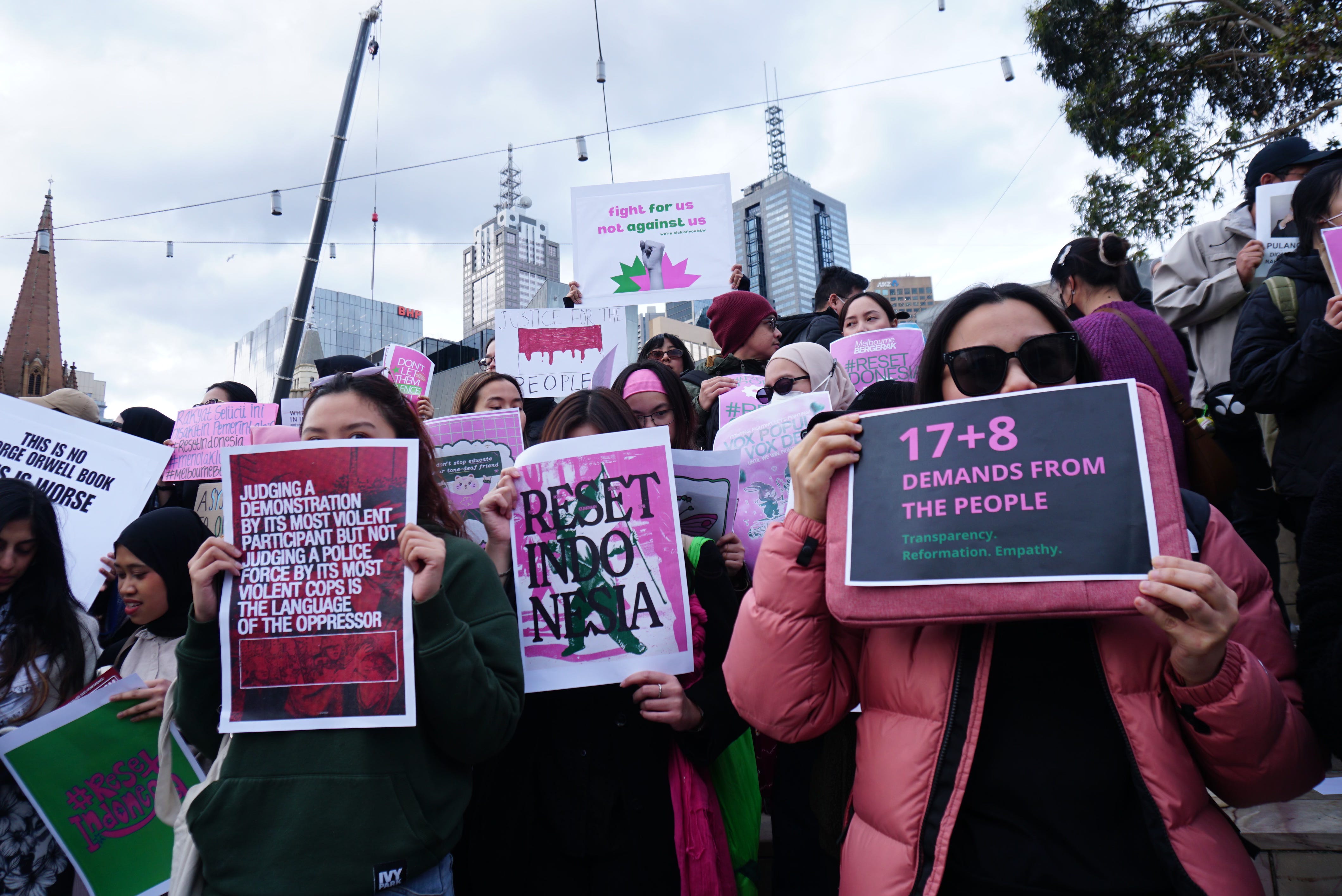
It was a cold Tuesday afternoon in early September last year. I was supposed to be in the library, working on a 1,000-word essay due at midnight. Instead, I found myself in a crowd of Indonesians at Melbourne’s Federation Square, roaring in a unison of profanities directed at a roster of political elites and institutions in Jakarta.
“Fuck, DPR (dé-pé-èr)! Fuck, fuck DPR!”
“Fuck, Prabowo! Fuck, fuck Prabowo!”
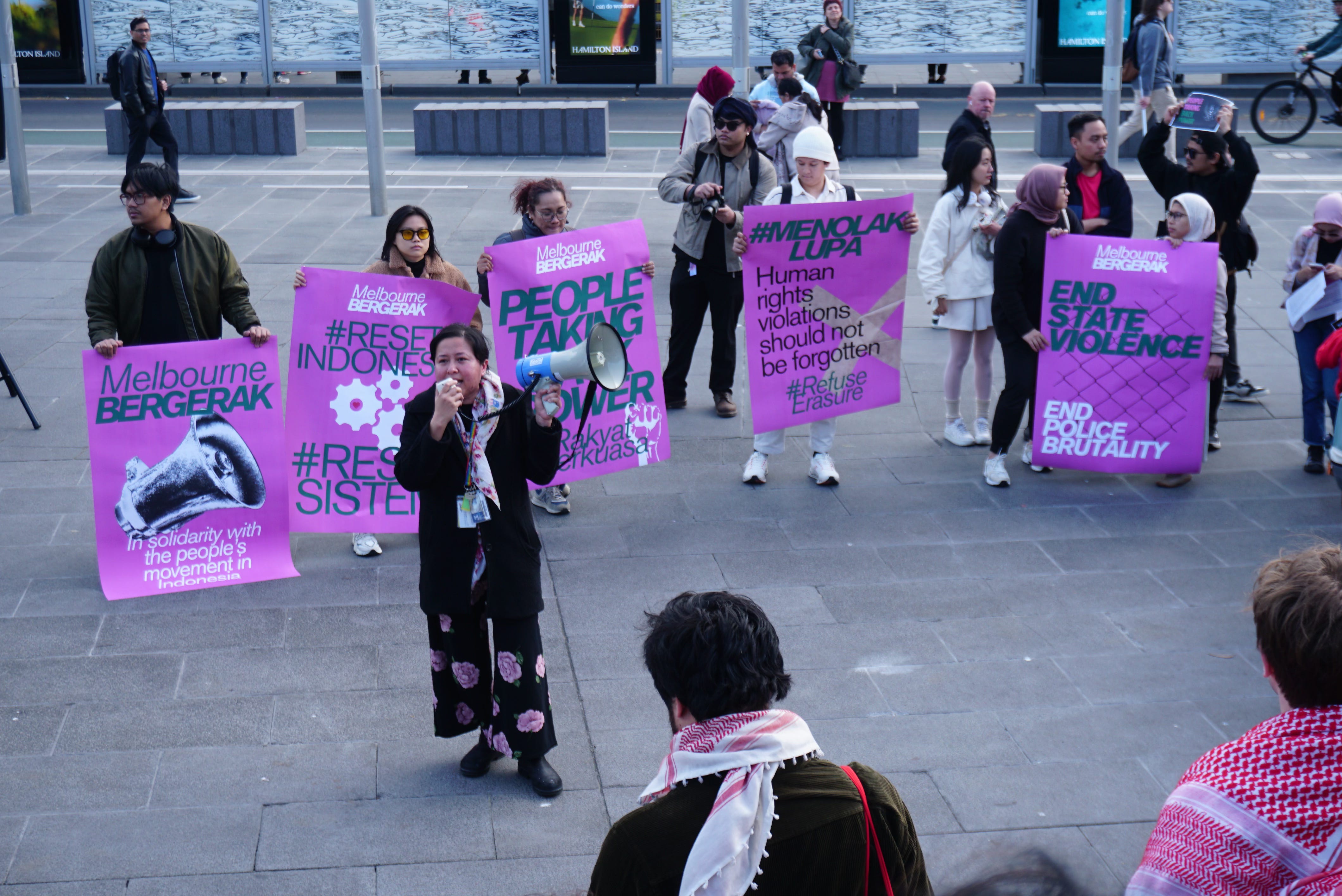
The military (TNI), the police force (Polri), and some other public figures and institutions were not spared from the chants as Pipin Jamson, the lead organiser at Melbourne Bergerak (“Melbourne Moves”), whipped demonstrators into a crescendo as if they were an orchestra and she the conductor.
The protest was a response to events that unfolded in August 2025. During what was meant to be a month of national independence, thousands of people took to the streets in cities across the country to protest against the proposed exorbitant increase of allowances for national parliament members—worth around Rp 50 million (~A$ 5,000).
Public backlash was met with mockery. A lawmaker derided critics as “stupid” during a press conference. Others posted outrageously tone-deaf skits online. One female legislator ranted publicly about the daily struggle of being trapped as a passenger of a luxury car in Jakarta’s notorious traffic.
The demonstrations turned violent and culminated in multiple deaths, including that of the ride-hailing motorcycle taxi driver Affan Kurniawan in Jakarta, who was fatally run over by a group of policemen driving an armoured vehicle.
As a temporary member of Melbourne’s Indonesian diaspora, I shared the same amount of anger felt back home. Yet I felt helpless and guilty for not being able to do anything other than scrolling through and venting on X from a place far safer than home.
Organisers at Melbourne Bergerak, however, refused to do nothing. Pipin and other Indonesians–students and non-students–formed the group in 2024 after Prabowo’s electoral victory, which was followed by DPR’s attempt to revise the local election law.
For context, the proposed bill would’ve lowered the minimum age of gubernatorial and mayoral candidates, effectively paving the way for former president Joko “Jokowi” Widodo’s youngest son, Kaesang Pangarep, to run for local office. The Constitutional Court later annulled the bill.
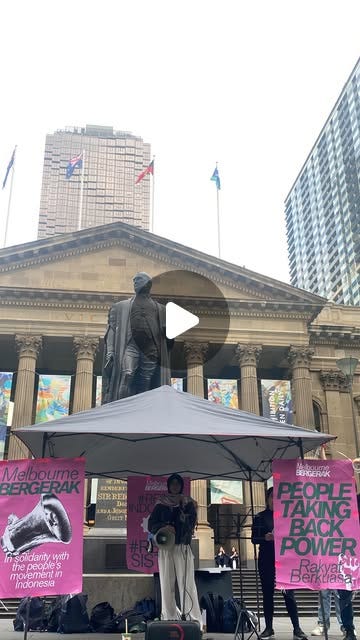
Melbourne Bergerak’s first action was a march to the Indonesian consulate in Melbourne. Since then, they regularly organised Aksi Kamisan (Thursdays Movement), a weekly peaceful protest against the state’s failure and inaction to address the disappearance of activists during the 1998 upheavals and other cases of human rights violations.
During a Kamisan outside the State Library that coincided with May Day 2025, the group protested the regime’s plan to name Soeharto a national hero. The turnout was modest compared with the angry crowd at Fed Squre in September, but Pipin contended that political consciousness matters as much as numbers.
With more than 4,000 Indonesian students in Australia being government-sponsored through the Indonesian Endowment Fund for Education (LPDP), she said, “That doesn’t mean we’re bought by the state.”
“We don’t owe Prabowo or Jokowi. [Our scholarship money] is the people’s money. That’s why, when certain policies disadvantage the people, awardees should stand with them, not bow to those in power,” she said.
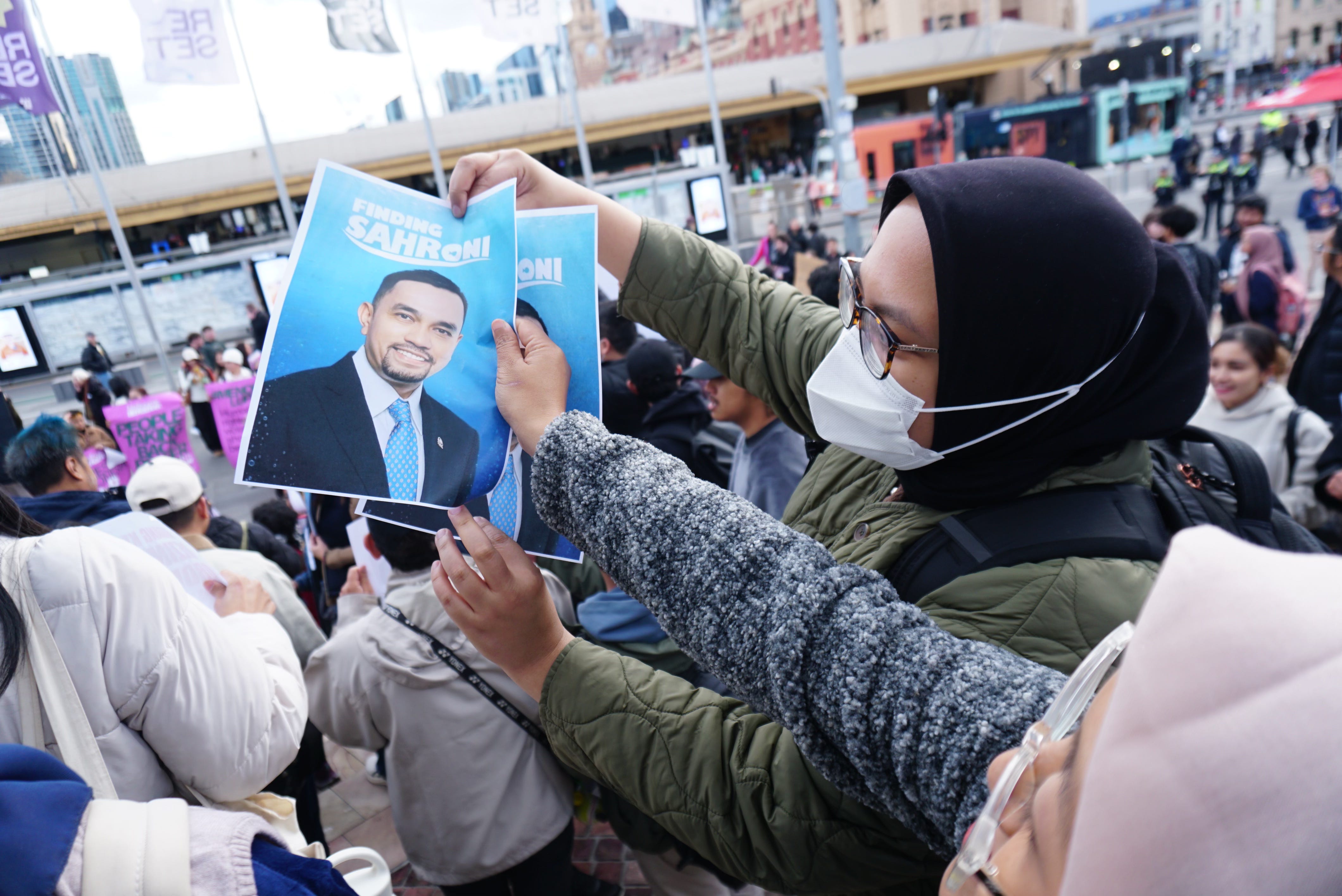
Acquiescence, Pipin argued, creates a culture of impunity within the nation and its institutions. Elevating Soeharto to national hero status, she added, would epitomise that impunity, given that he was never tried for his alleged involvement in multiple cases of human rights violation, including the 1965 communist purge when he was army chief.
“If we don’t resolve past human rights violations head-on, even human rights violator can become a president,” Pipin said, referring pointedly to Prabowo who, as commander of the army’s special force (Kopassus), has been accused of allegedly abducting activists in 1998 and being involved in a massacre in Timor Leste 15 years earlier.
Since the ex-general—also Soeharto’s former son-in-law—took office in October 2024, the military’s influence over civilian life has only deepened. Following the revision of the Military Law, soldiers started coming to universities, overseeing discussions, disseminating the newly revised law, and gathering students’ personal data.
“It’s like being back to the 1970s,” Pipin said, invoking the authoritarian New Order era under Soeharto, when the military’s dual-function in defence and government was the norm.
Disappointed, but not surprised
If one phrase could capture perfectly the prevailing mood among Indonesians, it has to be “disappointed but not surprised”.
After having their homes looted, followed by a short suspension, the tone-deaf legislators who ignited the mass demonstration returned to business as usual. The driver of the armoured vehicle that killed Affan was never jailed. Instead, he received a seven-year demotion, while other three officers were ordered to apologise to Affan’s family.
The culture of impunity, it seemed, remained deeply entrenched within state institutions.
In fact, the government is coming after those who have been vocal against it. Following the August demonstations, 652 people were arrested, with 522 still in custody as “political prisoners”, according to the Youth Movement Against Criminalisation.
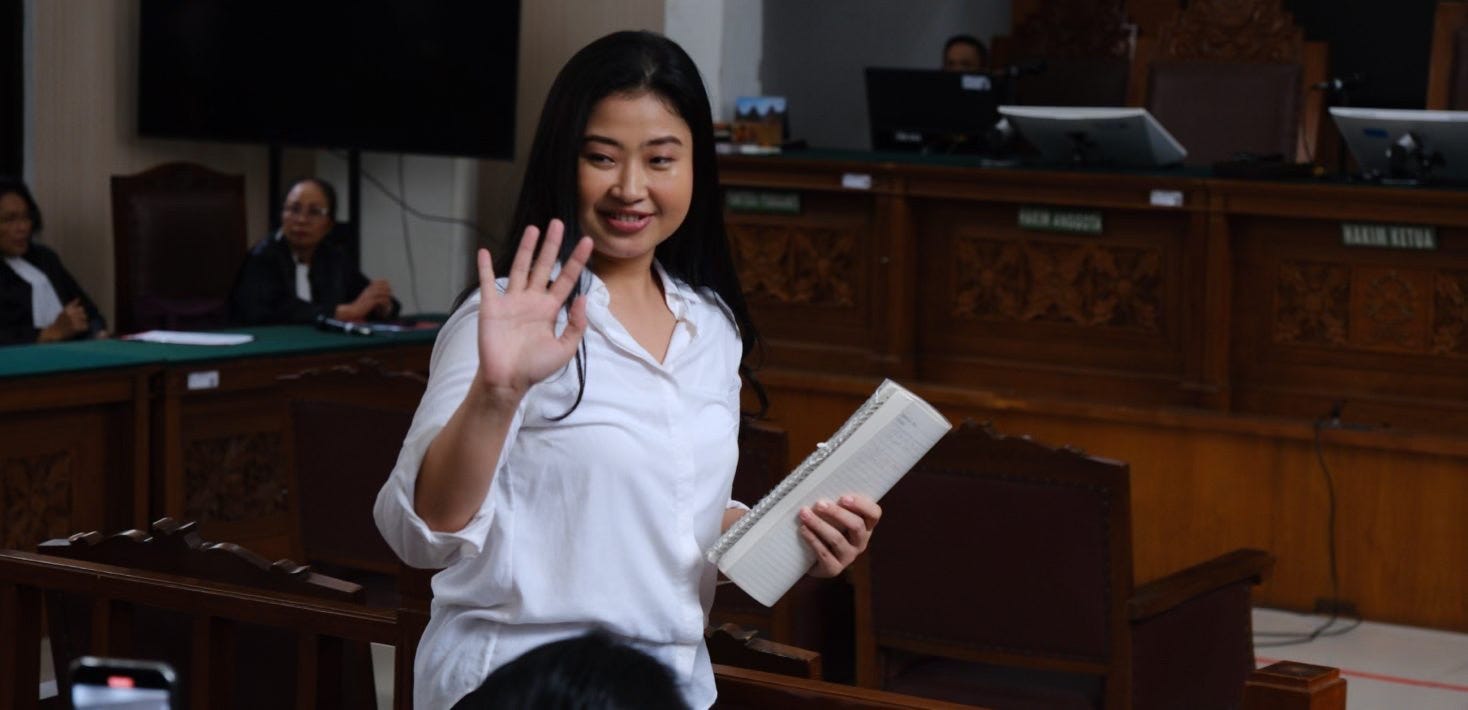
Among them is Laras Faizati, a former employee at the ASEAN Inter-Parliamentary Assembly office. She has been sentenced to one year in prison for incitement of hatred and violence. Her crime: posting a smiling photo of herself pointing at police headquarters in Jakarta, accompanied by a caption calling for the building to be burned down and officers brought to justice.
Laras pleaded not guilty, saying the post was a mere emotional response from Affan’s death.
“If our expressions, voices, feelings, opinions, critiques, disappointments, and demands are deemed as crime, then what is our worth—my worth—as human being, as a member of the public?” she asked.
I wonder what awaits organisers of Melbourne Bergerak when they return to Indonesia. One organiser told me she had multiple anonymous accounts following her on Instagram after the September 2025 protest at Fed Square. She temporarily deactivated her account.
In fact, every Indonesian, including Pipin who teaches politics at Universitas Gadjah Mada in Yogyakarta, should be concerned now, particularly after the new Criminal Code and Criminal Procedure Code came into force in early 2026.
The laws criminalise assaults to “the honour and dignity of the President or the Vice-President”, punishable by up to three and a half years in prison. Organising demonstrations without permits can also carry prison sentences of up to six months.
More troubling still, the dissemination of ideologies other than Pancasila is punishable by a maximum of four years’ imprisonment. This is nothing new for many activists, including Delpedro Marhaen who was arrested for inciting chaos during August 2025 protests. Police confiscated 16 books from his home and office as they searched for proof of his deviant ideology.
The saying “Semua Bisa Kena”—”everyone can be criminalised”—has become an unsettling reality, including for those at Melbourne Bergerak once they set foot in the motherland.
Australia may offer Indonesians a breathing space, though temporary for many. Yet, in August last year, a NSW artist, Michael Agzarian, was fined A$500 by the state police for displaying a poster in front of his studio that read “Fuck Israel. Death, Death, Death to the IDF”, as reported by Deepcut News.
Is this a sign that Australia, too, might be facing a challenge to freedom of expression?
Note: This article has been edited to remove typographical and grammatical errors.